ILO - Business Analysis on Supply Chain Management Systems
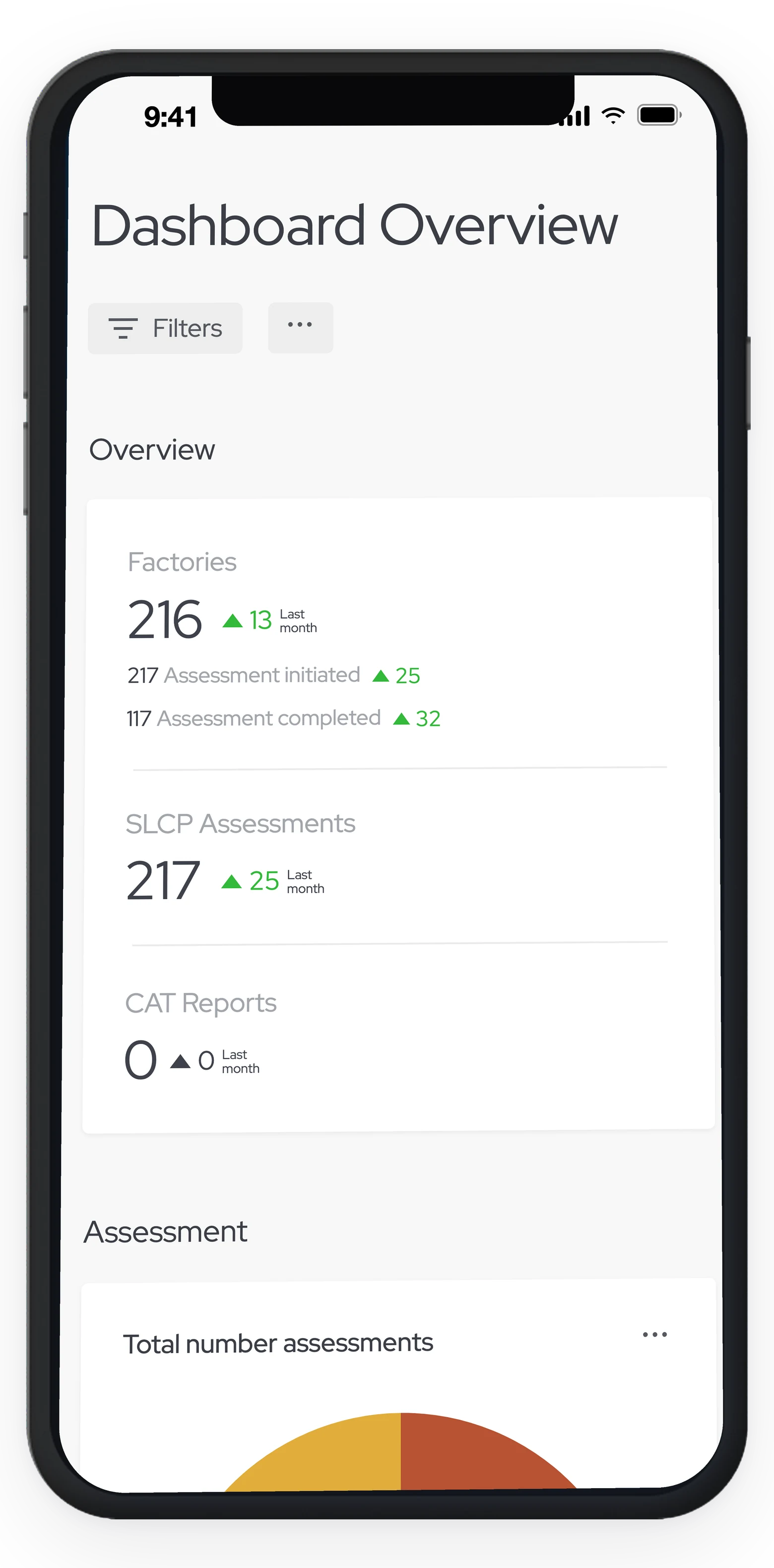
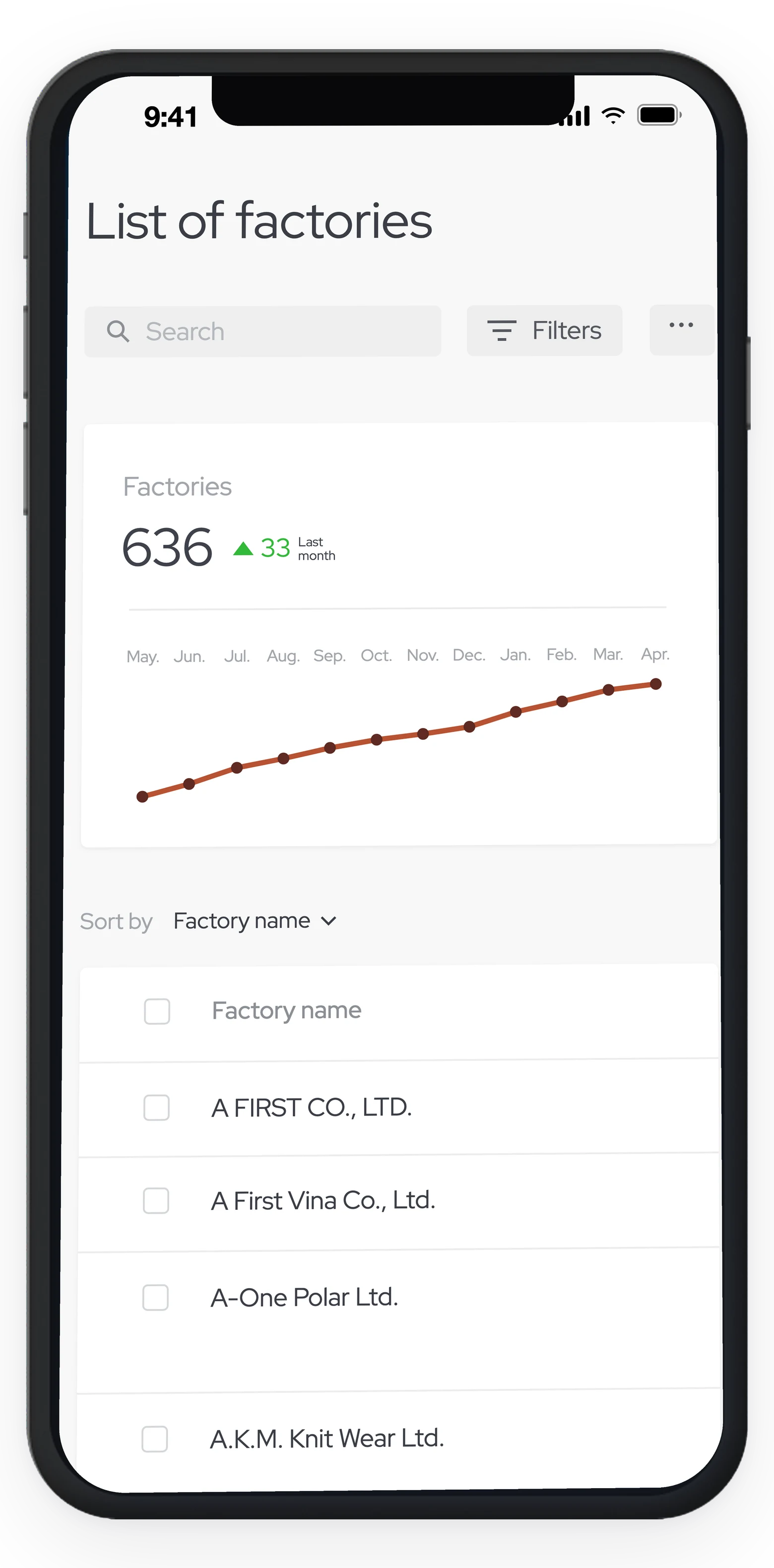
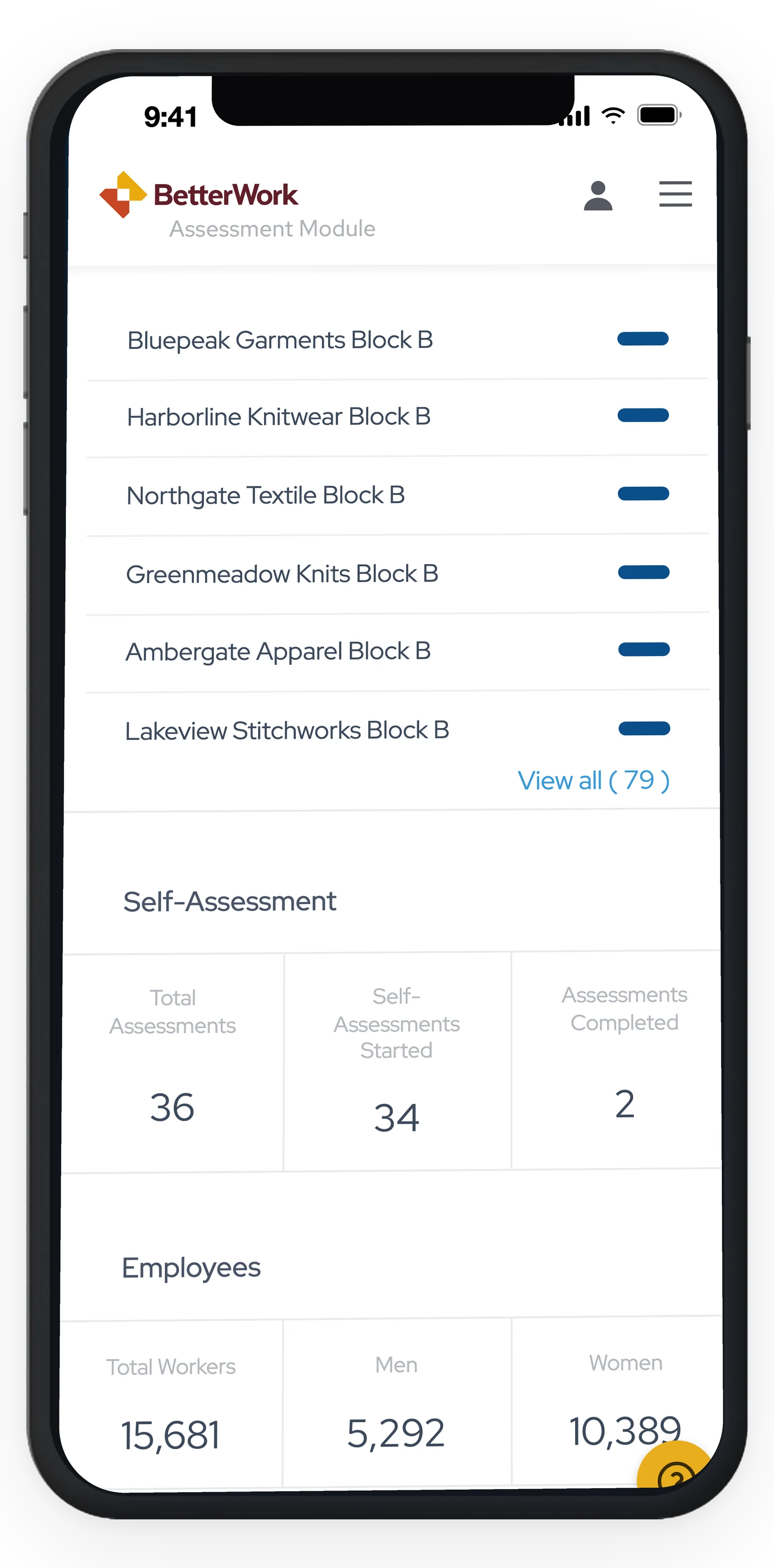
Better Work, a partnership between the ILO and the International Finance Corporation, works to improve conditions in the garment industry. We carried out business analysis on its supply chain management systems and designed a prototype platform to collect and categorise factory data, and proposed a modular system to replace its previous one, with a new design, mobile data collection and automated analysis.
- Client
- ILO
- When
- Apr–Nov 2018
- Team
- 5 people
- Services
- Info management & MEAL, App development
- Technologies
- Angular, Angular Material, Python, Django, Keycloak, Azure
- Industry
- Fundamental Labour Rights
- SDGs
- 8. Decent work and economic growth, 10. Reduced inequalities, 12. Responsible consumption and production
- Client website
- ilo.org
As a partnership between the UN’s International Labour Organization and the International Finance Corporation, a member of the World Bank Group, Better Work brings diverse groups together, governments, global brands, factory owners, and unions and workers, to improve working conditions in the garment industry and make the sector more competitive. We designed a prototype platform to collect and categorize data in different datasets from factories according to global/local reach and specificity, purpose and legal reference.
Goal 1: Employers and workers and their representatives uphold and are protected by national labour laws and fundamental principles and rights at work; enterprises in the sector that have emerged from the COVID-19 crisis are more sustainable, resilient and inclusive.
Goal 2: Better Work’s impact on workers, businesses and compliance is sustained by national institutions that leverage the programme’s approaches, data and evidence.
Goal 3: Enterprises that participate in Better Work have adopted policies and practices on responsible business conduct that support the realization of decent work.
Goal 4: By 2027, Better Work’s learnings and methods have created positive social and environmental impacts beyond the programme as they are adopted in other countries and sectors.
Relief Applications team chose to renew their previous system, STAR, by creating a new modular system with a total rebrand of the design and better user experience. This led to better performance, a more user-friendly website and overall a faster system.
The challenge
- Reduce loading time, using fewer resources and improving quality
- Put the user at the center of the development process
- Transparency of information and accountability towards all stakeholders
What we did
- Use of Mobile Data Collection (MDC) techniques developing standardized options for questionnaires and automated data analysis
- Machine Learning capacities to leverage their extensive historical data and how to use it to predict possible answers to questionnaires
- Transparency of information and accountability towards all stakeholders
Relief Applications has been providing us with invaluable support as we seek to take our data management and systems capabilities to the next generation
More projects
- MSF UK - REMIT: Research Management & Impact Tool Review: MSF UK
- Equality Fund - Impact Library: Data, Stories & Insights: Equality Fund
- HQAI - Innovation & IT Advice: HQAI
- WHO - Global Health Cluster Support: WHO
- FIDH - Automated Timesheet Management System: FIDH
- UNESCO - MAB Biosphere Reserves Platform: UNESCO