ASRA - Systemic Risk Assessment and Response Web App
ASRA, the Accelerator for Systemic Risk Assessment, is a global initiative tackling escalating, interconnected risks by putting practical tools in the hands of decision-makers. Its Systemic Risk Assessment (SRA) and Systemic Risk Response (SRR) methodologies were delivered through guidance documents and spreadsheets, limiting their reach, usability and consistency.
- Client
- ASRA
- When
- Jan 2025–Jul 2026
- Team
- 6+
- Services
- Info management & MEAL, App development
- Technologies
- Django, Angular, PostgreSQL, Azure
- Industry
- Risk & Resilience, Disaster Risk Reduction & Climate
- SDGs
- 1. No poverty, 3. Good health and well-being, 9. Industry, innovation and infrastructure, 11. Sustainable cities and communities, 13. Climate action, 17. Partnerships for the goals
- Client website
- asranetwork.org
The earth’s ecological systems and humanity face escalating, interconnected, systemic risks. ASRA (the Accelerator for Systemic Risk Assessment) is a global initiative dedicated to raising awareness about the urgent need to anticipate and manage these critical threats, and accelerating the development of practical tools that decision-makers need to inform their actions. Its Systemic Risk Assessment (SRA) and Systemic Risk Response (SRR) methodologies, initially delivered via guidance docs and spreadsheets, needed wider reach, usability, and consistency. Relief Applications’ mandate was to turn these resources into an intuitive web experience so diverse users can understand, apply, and iterate on systemic-risk practices.
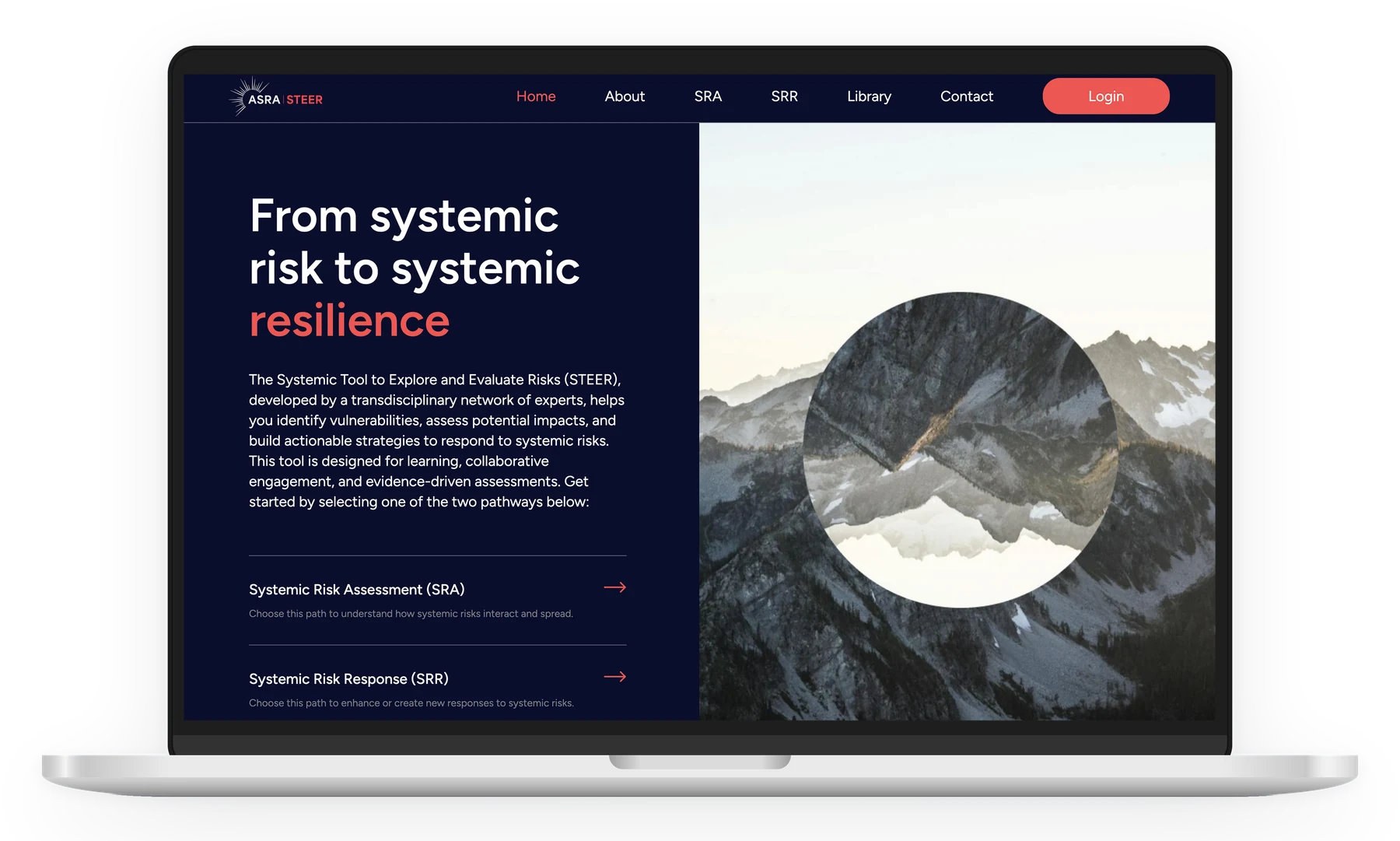
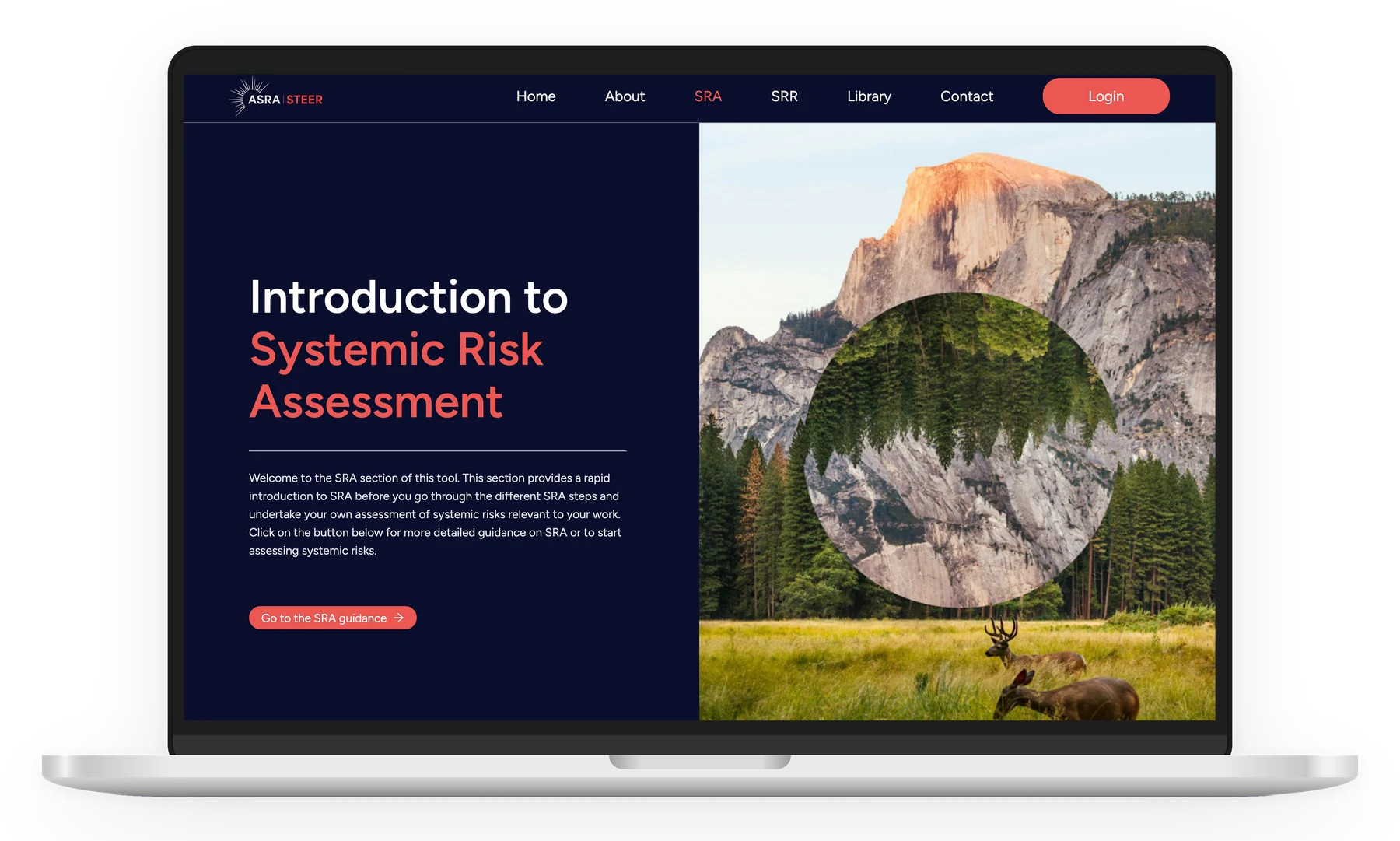
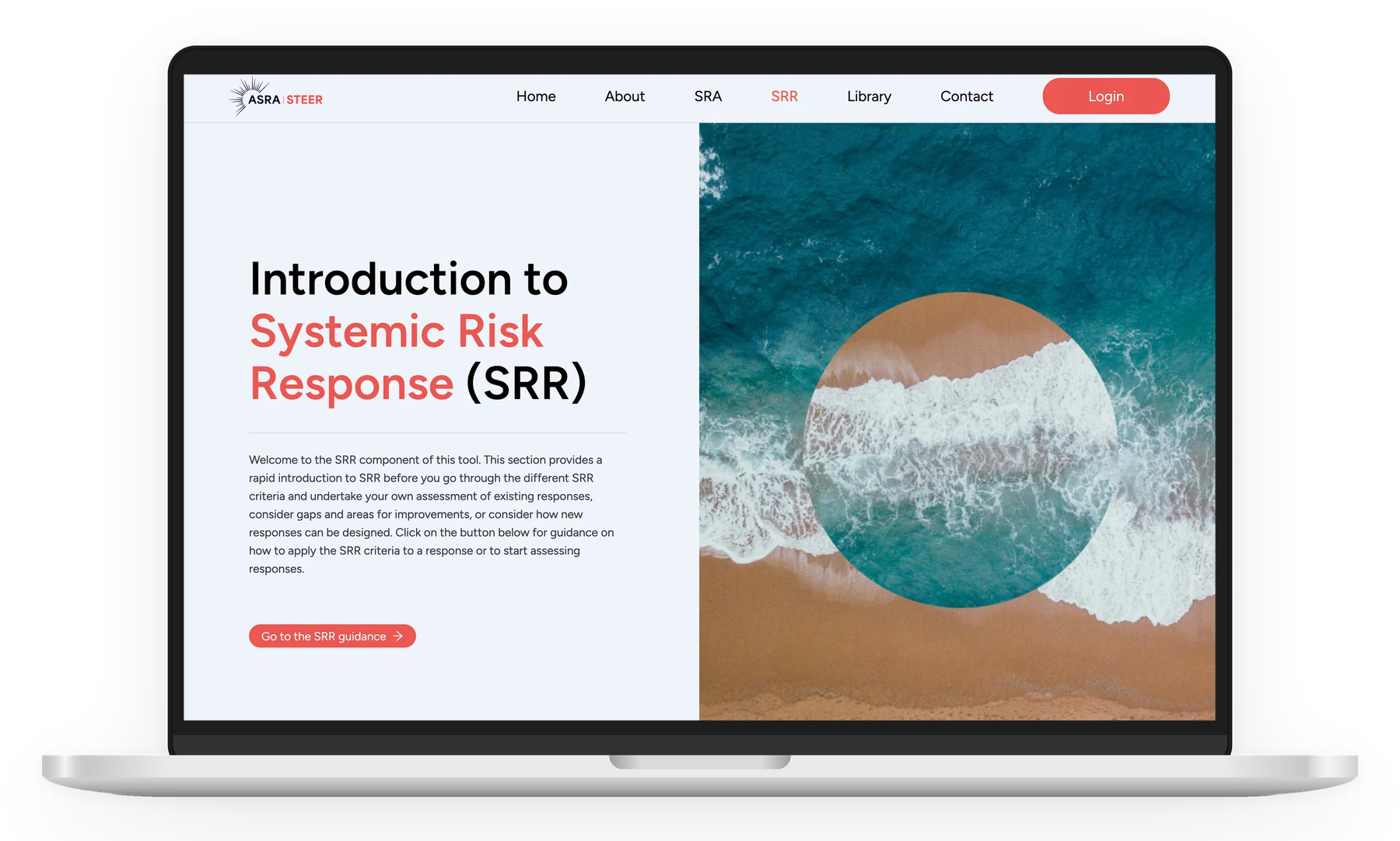
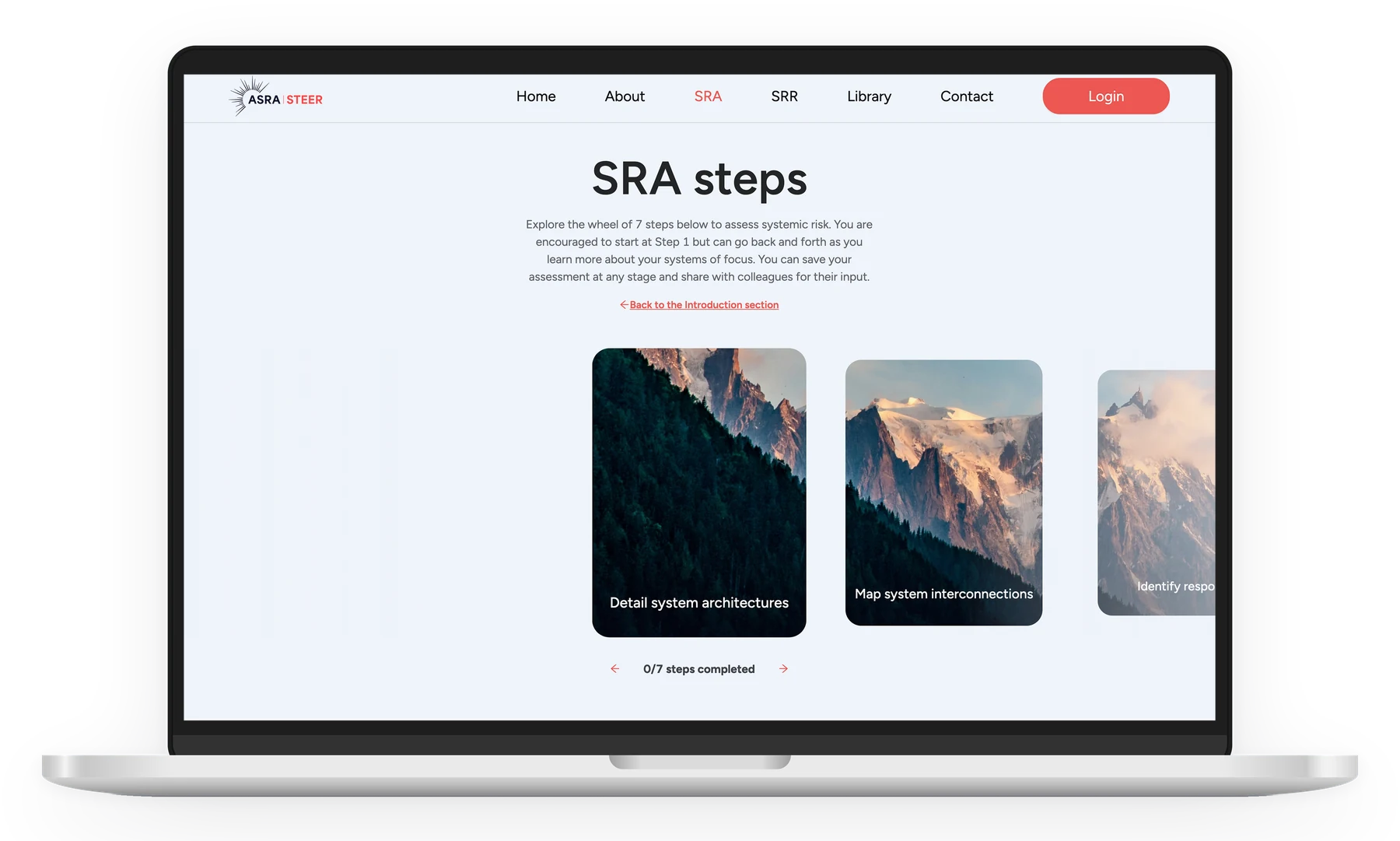
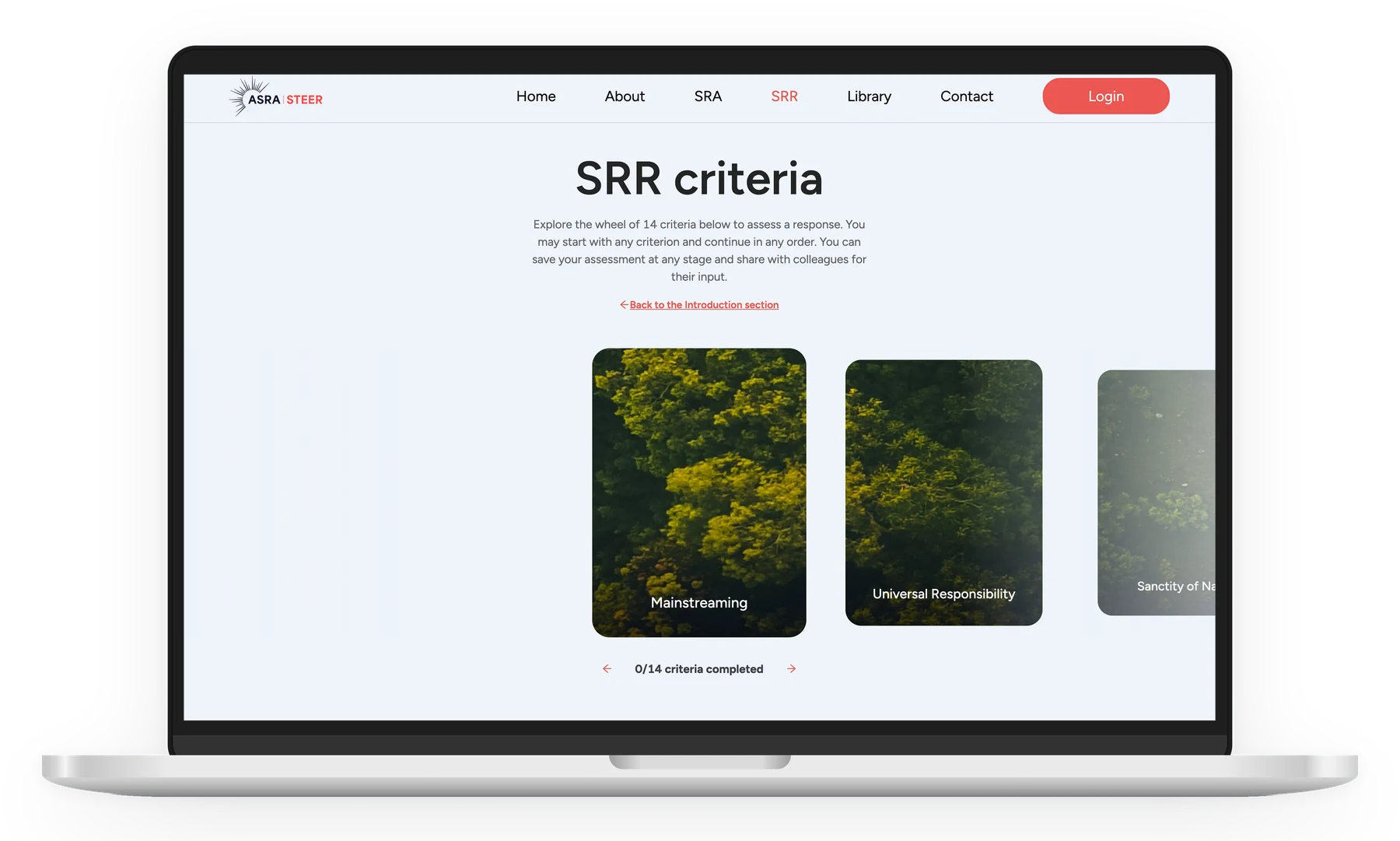
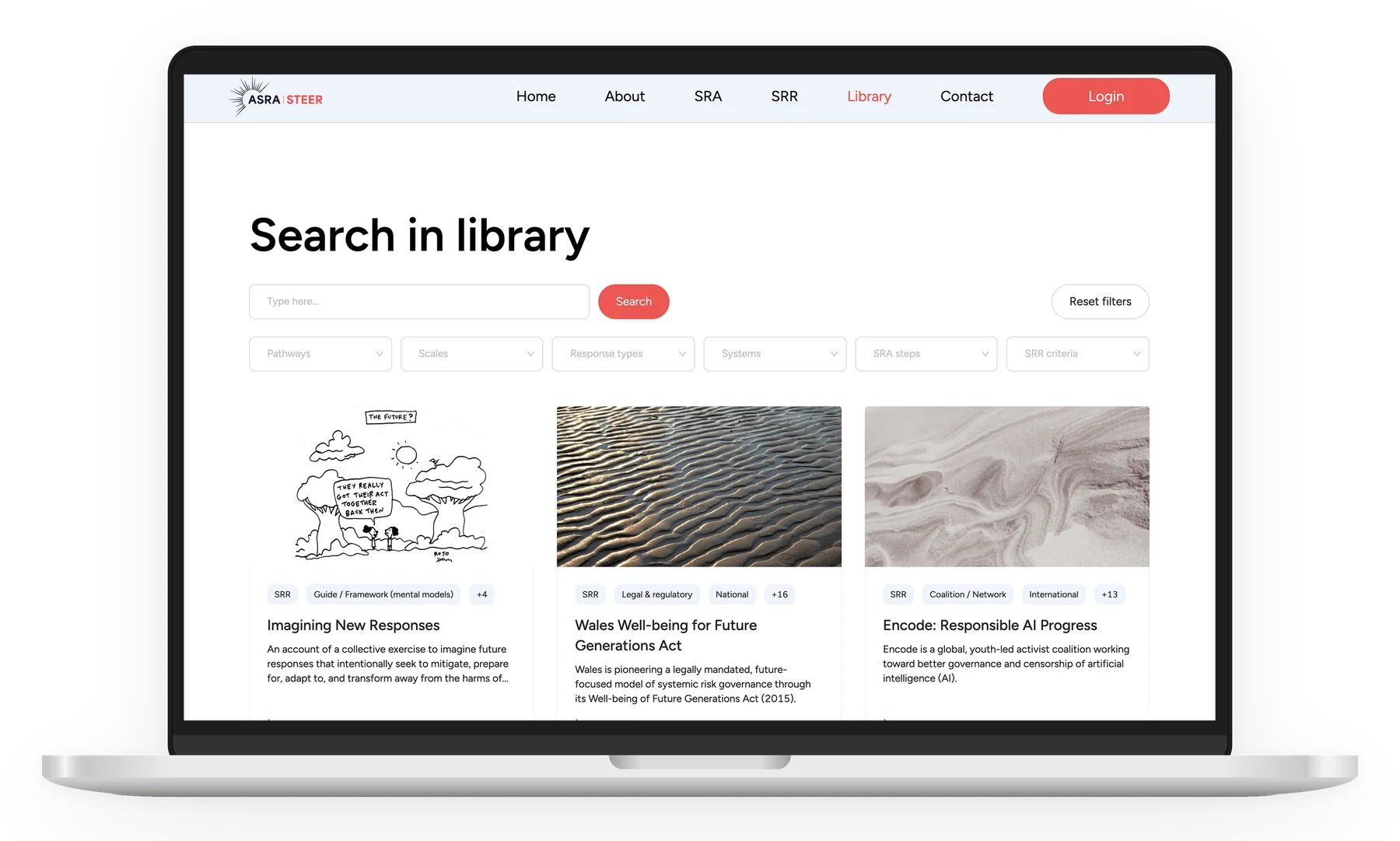
We collaborated with ASRA working groups to translate complex SRA/SRR workflows into clear, stepwise interfaces: carousels for steps/criteria, structured question sets, workspace management, and automated reports (including PDF outputs). We aligned content architecture with user types, ensured accessibility and responsiveness (desktop to mobile), and set up an information library for re-use. The solution was delivered in two phases, enabling iterative validation with pilots and rapid refinements based on feedback.
A production web app integrating SRA/SRR guidance, interactive questionnaires, workspace flows, and exportable reports, plus a content library and mobile-friendly views. The result: easier onboarding to systemic-risk methods, more consistent data capture, and actionable outputs for decision-makers across sectors.
This project demonstrates Relief Applications’ strength in turning expert methodologies into interactive, scalable products: discovery-to-delivery collaboration, information architecture for complex content, step-driven UX for assessments, structured data capture, automated reporting, and mobile responsiveness, transferable to IM, research, MEAL, and policy-support platforms.
All rights to this video belong to ASRA Network.
The challenge
- Complex methodology: Turning ASRA’s detailed SRA/SRR frameworks into a simple, guided digital experience without losing rigor was a key challenge.
- Diverse user groups: The platform needed to accommodate both technical experts and first-time users with different levels of familiarity with the concepts. From NGOs, government entities, scholars, etc.
- Consistent data capture: Data was previously collected in varied formats, making harmonization and cross-analysis impossible.
- Reporting & exports: Manual report creation was slow and inconsistent (if any at all), highlighting the need for automated, standardized outputs.
- Mobile responsiveness: A global user base required a responsive design that performs well on any device and connection speed.
What we did
- Guided step flows: We designed intuitive step-by-step interfaces that simplify navigation through complex methodologies.
- Structured questionnaires: Dynamic forms ensure consistency, accuracy, and comparability across all user inputs.
- Workspace management: Users can organize, duplicate, and collaborate on multiple assessments within dedicated workspaces.
- Automated PDF reports: Instant, exportable reports provide clear, professional summaries ready for sharing and decision-making.
- Responsive UI patterns: A mobile design ensures accessibility, usability, and performance across all devices.
More projects
- MSF UK - REMIT: Research Management & Impact Tool Review: MSF UK
- Equality Fund - Impact Library: Data, Stories & Insights: Equality Fund
- HQAI - Innovation & IT Advice: HQAI
- WHO - Global Health Cluster Support: WHO
- FIDH - Automated Timesheet Management System: FIDH
- UNESCO - MAB Biosphere Reserves Platform: UNESCO